Journal of Health Psychology, Online first:
https://doi.org/10.1177/13591053231216014
ABSTRACT
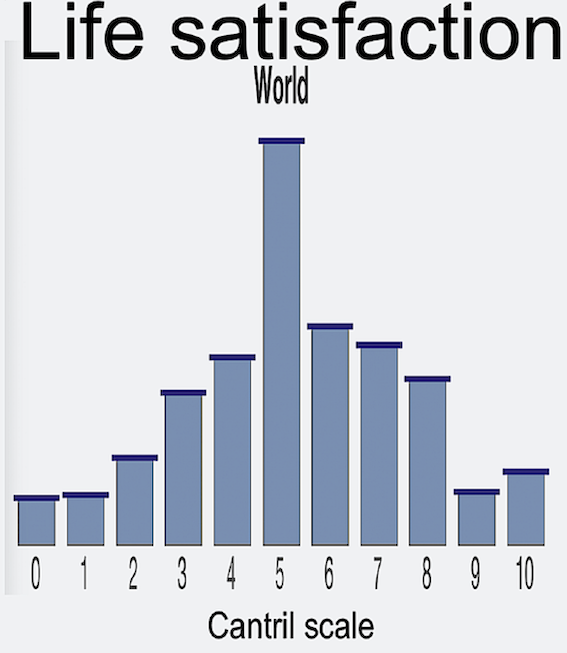
The Homeostasis Theory of Well-Being proposes a homeostatic modular system for the creation of human well-being. This article aims to: i) provide a proof-of-concept demonstration of the feasibility of the theory in its bio-psycho-social context; ii) indicate prima facie empirical support for the homeostatic nature of the 16 proposed modules; iii) discuss the similarities to and differences from other homeostasis theories of well-being. Following the Central Limit Theorem, any homeostatic system with multiple inputs produces outputs with a Gaussian distribution. The data-base of studies contains approximately 2000 publications reporting U- or inverse U-shaped curves for the 16 homeostatic domains specified in the theory. The Homeostasis Theory of Well-being remains speculative and requires controlled longitudinal study to determine the scientific validity of the causal network proposed by the theory. The theory has implications for our understanding of humans’ drive for balance, equilibrium and stability in this increasingly uncertain world.


Leave a Reply